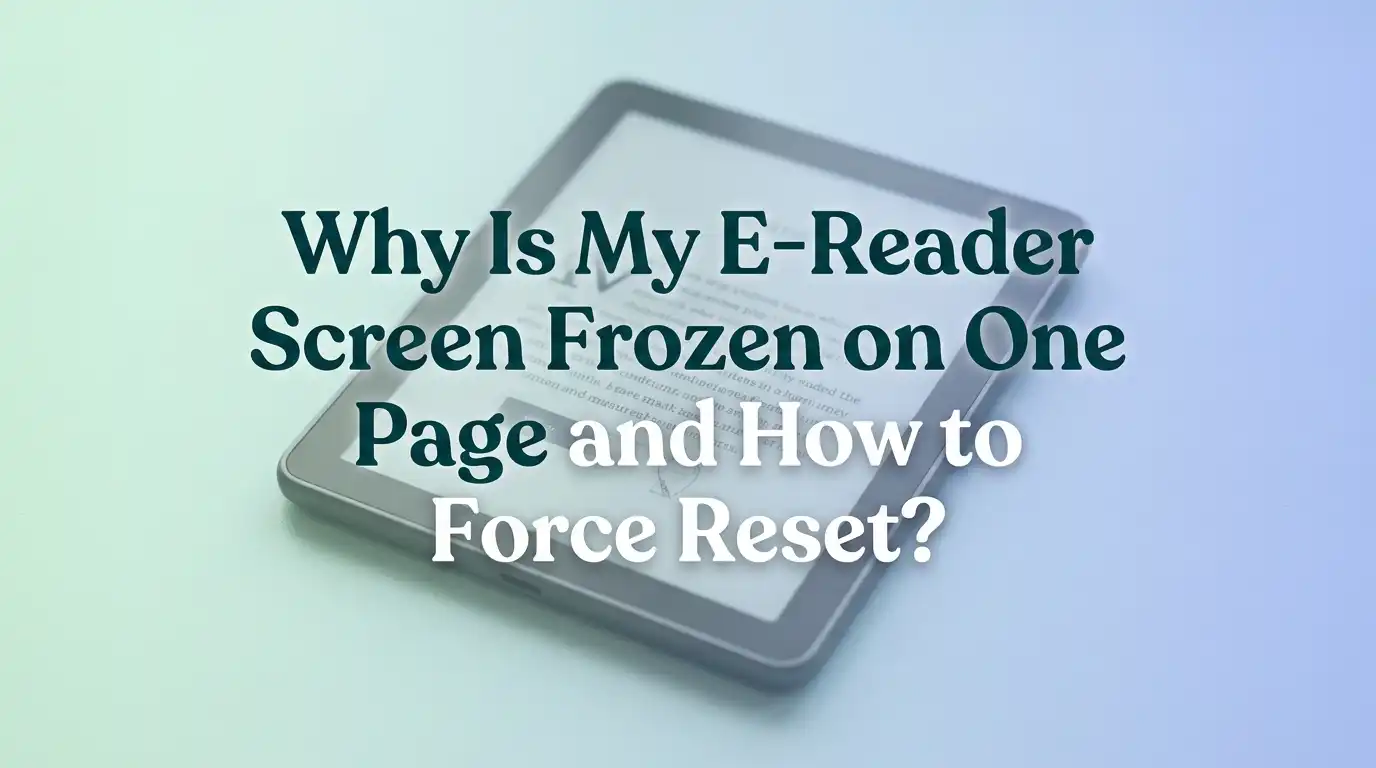
Why Is My E-Reader Screen Frozen on One Page and How to Force Reset?
Few things feel more frustrating than settling down with a good book on your e-reader, only to find the screen completely stuck on one page. You tap, you swipe, you press buttons, but nothing happens.
The page just sits there, mocking your reading plans. If this sounds familiar, you are not alone, and the good news is that most frozen e-reader issues can be fixed in minutes without any technical skill.
This guide walks you through every practical step to unfreeze your Kindle, Kobo, Nook, Boox, or any other e-ink device. You will learn why screens freeze, how to force a reset safely, and how to stop it from happening again. Let us get your reading back on track.
Key Takeaways
- A frozen screen is usually a software glitch, not a hardware failure. Most cases are caused by a crashed app, a stalled book file, or low battery, and a simple restart fixes them.
- The 40 second power button hold is the universal fix for most Kindle models, while Kobo and Nook devices respond to a 15 to 20 second hold. Always count slowly and ignore any shutdown prompts.
- Charge your e-reader for at least 30 minutes before assuming it is broken. A deeply drained battery can mimic a frozen screen and prevent any reset from working.
- Ghosting is different from freezing. A ghost image is a faint shadow of old text, while a true freeze means the device does not respond to any input at all.
- A factory reset should be your last option because it erases your settings and downloads. Try soft resets, hard resets, and manual resets first.
- Prevention beats repair. Keeping firmware updated, avoiding extreme temperatures, and closing books properly will keep your screen running smoothly.
What It Means When Your E-Reader Screen Freezes
A frozen e-reader screen means the display stops responding to taps, swipes, or button presses. The page you were reading stays locked in place. Sometimes the touch sensors still register input, but nothing changes on the screen. Other times the device feels completely dead.
This is different from normal e-ink behavior. E-ink screens hold an image even when powered off, so a static page is not always a freeze. The real test is whether your device responds to commands. If tapping the corner or pressing the power button does nothing, you have a true freeze.
Most freezes happen because the operating system has crashed in the background. The screen simply shows the last image it had time to render before the software locked up.
Common Reasons Why Your E-Reader Gets Stuck on One Page
Several issues can cause your e-reader to freeze. The most frequent culprit is a corrupted book file. When the device tries to load a damaged EPUB or AZW file, the reading software can stall and refuse to move forward. Large PDF files with heavy images are especially prone to this.
Other common reasons include a low battery, outdated firmware, too many open background tasks, and memory shortages from storing thousands of books. Sometimes a recent software update introduces bugs that cause random freezes.
Physical factors also matter. Extreme cold or heat can slow down the e-ink refresh process, making the screen appear stuck. Dropping the device, even on a soft surface, can loosen internal connections and create touch response problems.
How to Tell If Your Screen Is Truly Frozen or Just Slow
E-ink screens refresh slower than regular tablets, so a delay does not always mean a freeze. Give your device 15 to 20 seconds to respond before assuming something is wrong. Many e-readers pause briefly when opening large files or syncing in the background.
Look for clues. A blinking LED light usually means the device is still working. A completely dark indicator with no response to the power button suggests a real freeze. Try pressing the home button, the menu icon, or the page turn buttons one at a time.
If nothing changes after 30 seconds of patient testing, you can safely move on to the reset steps below. Acting too quickly on a slow screen can interrupt important processes.
Step One: Try a Simple Soft Reset First
The soft reset is the gentlest fix and often solves the problem without any data loss. For most Kindles, press and hold the power button for about 7 to 10 seconds until the screen flashes or a dialog box appears. Tap restart if prompted, then let the device reboot.
For Kobo devices, slide the power switch and hold it for the same duration. Nook readers respond to a quick 5 second press. The screen will go blank, show a logo, and return to your home page within a minute.
Pros: Quick, safe, and keeps all your books and settings intact. Cons: It does not work on deeply frozen devices, and you may need to repeat it more than once before it succeeds.
Step Two: Perform a Force Reset by Holding the Power Button
If the soft reset fails, it is time for the force reset, also called a hard reset. This method works on nearly all modern e-readers. Press and hold the power button for a full 40 seconds on Kindle devices. Count slowly, because rushing this step is the most common reason it fails.
For Kobo, hold the power button for 15 seconds. For Nook, try 20 seconds. The screen may flash, show the logo, or stay blank during the hold. Ignore any pop-up messages that appear, and keep pressing.
Pros: Fixes deep software crashes that soft resets cannot reach. Cons: It can feel scary the first time, and some users let go too early. If nothing happens after the first try, repeat the process two or three more times.
Step Three: Charge Your E-Reader Before Trying Again
A dead or nearly dead battery can prevent any reset from working. Even if the battery icon showed plenty of power before the freeze, a software glitch can drain it quickly in the background. Plug your device into a wall charger using the original cable.
Leave it charging for at least 30 minutes before attempting another reset. Avoid charging from a computer USB port during troubleshooting, because the power output is often too low for a frozen device.
Pros: Solves freezes caused by low power without any risk to your data. Cons: It takes time and patience, and you cannot use the device while you wait. Many users skip this step and assume their reader is broken when the battery was simply too low to respond.
Step Four: Connect to a Computer and Use Manual Reset
Some e-readers, especially Kobo models, have a manual reset option that uses a recovery mode. Connect your device to a computer with a USB cable. Wait until the computer recognizes it as a storage drive. This alone can sometimes wake up a frozen screen because the device receives steady power and a system signal.
If the screen still does not respond, look for the small reset pinhole on the back of your Kobo. Use a paperclip to press it gently for a few seconds. Kindle devices do not have this pinhole, but the USB connection trick still helps.
Pros: Bypasses touch screen issues and works when buttons fail. Cons: Requires a computer and the correct cable, and not every e-reader supports this method.
Step Five: Try the Quick Press Trick for Stubborn Freezes
Some users report that a long hold alone does not always work. A clever trick is to hold the power button for 4 to 5 seconds, release it, and then immediately press it again quickly. This double action can jolt the system into rebooting when a single press does nothing.
This method is especially useful for older Kobo Clara and Kindle Touch models. It works because some devices register a long press as a sleep command rather than a restart command. The quick second tap forces the reboot signal.
Pros: Often succeeds when the standard 40 second hold fails, and takes only seconds. Cons: Timing matters, so you may need several attempts. It does not work on every device model.
Step Six: Refresh the Screen to Clear Ghost Images
Sometimes what looks like a frozen page is actually ghosting. Ghosting happens when old text or images leave faint shadows on the screen because the e-ink particles did not fully reset. The device is not frozen, but the display is confused.
Open the settings menu and look for an option called refresh screen, page refresh, or full refresh. Turn this on so every page turn does a full black flash. This clears ghost images and improves clarity.
If you cannot reach settings because of the freeze, open a book with heavy graphics, like a comic or PDF, after restarting. The dense images force a full refresh. Pros include better readability and no data loss. Cons are slightly slower page turns and a small hit to battery life.
Step Seven: Remove the Problem Book File
If your e-reader freezes every time you open the same book, the file itself is likely corrupted. Connect the device to your computer and browse to the documents or books folder. Find the file that matches the title where you got stuck and delete it.
After deletion, eject the device safely and restart it. The freeze should not return. You can redownload the book from your cloud library or transfer a fresh copy.
Pros: Permanently removes the source of the freeze and prevents future crashes. Cons: You lose your reading progress for that book, and finding the exact file name can be tricky if you have many titles. Always back up your highlights before deleting anything important.
Step Eight: Update Your E-Reader Firmware
Outdated software is a hidden cause of repeat freezes. Manufacturers regularly release firmware updates that fix bugs and improve stability. Once your device restarts, connect to Wi-Fi and check for updates in the settings menu.
On Kindle, go to Settings, then Device Options, then Advanced Options, and tap update your Kindle. On Kobo, look under More, then Settings, then Device information. Updates can take 10 to 20 minutes, so make sure your battery is above 50 percent.
Pros: Prevents future freezes and adds new features. Cons: Some updates introduce new bugs of their own, so read user reports before updating if your device is currently stable. Never interrupt an update in progress, because that can cause permanent damage.
Step Nine: Perform a Factory Reset as a Last Option
If nothing else works, a factory reset will erase all content and settings, returning your e-reader to its original state. This should be your final option because you will lose downloaded books, bookmarks, notes, and account info. Most content can be redownloaded from your cloud library afterward.
To start, go to settings and look for reset device, reset to factory defaults, or erase and deregister. Confirm the action and wait for the device to reboot. The setup wizard will guide you through reconnecting to Wi-Fi and your account.
Pros: Solves nearly every software issue and gives you a clean slate. Cons: Total data loss on the device, and you will need to redownload everything. Reserve this fix for serious freezes that other methods cannot solve.
How to Prevent Your E-Reader Screen From Freezing Again
Prevention is easier than repair. Keep your device updated, charge it before it drops below 10 percent, and avoid loading huge unsupported file formats. Convert large PDFs to EPUB when possible, since e-readers handle EPUB more smoothly.
Store your e-reader at room temperature and protect it from drops with a case. Restart the device once every few weeks even if it seems fine. A scheduled restart clears memory and prevents background crashes.
Limit the number of books stored on the device at one time. While modern e-readers can hold thousands of titles, a packed library slows down indexing. Move finished books to the cloud and only keep your active reads on the device. These habits will keep your screen responsive for years.
When to Contact Support or Consider a Replacement
If you have tried every reset method, charged the device fully, and still see a frozen screen, the issue may be hardware related. Cracked e-ink panels, water damage, or failed batteries cannot be fixed by software resets. Look closely for hairline cracks under the screen or unusual warmth from the device.
Contact the manufacturer support team with your device serial number and a description of what you tried. Devices under warranty may qualify for free repair or replacement. Amazon, Rakuten Kobo, and Barnes and Noble all offer customer support through their websites and apps.
If your e-reader is out of warranty and the repair cost is high, replacement may be more practical. Save your account login so all your purchased books transfer to the new device automatically.
FAQs
How long should I hold the power button to force reset my Kindle?
Hold the power button for a full 40 seconds without releasing. Count slowly, ignore any shutdown messages that appear, and let go only after the screen restarts or goes completely blank. Repeat once or twice if the first attempt fails.
Will a force reset delete my books and notes?
No, a force reset only restarts the operating system. Your books, bookmarks, highlights, and account settings stay intact. Only a factory reset erases your data, and that requires extra confirmation steps inside the settings menu.
Why does my e-reader keep freezing on the same book?
The book file is likely corrupted or unsupported. Delete the file by connecting your device to a computer, then redownload a fresh copy from your library. If the freeze repeats, the format may be incompatible with your device.
Can a low battery cause my screen to freeze?
Yes, a deeply drained battery can lock the screen and stop the device from responding to any input. Charge it for at least 30 minutes using a wall outlet before assuming the freeze is a software or hardware fault.
Is ghosting on my e-reader screen the same as freezing?
No, ghosting is a faint shadow of old content that remains visible after a page turn. The screen is still working. Freezing means the device does not respond to any input at all. Turn on full page refresh to fix ghosting.
How often should I restart my e-reader to prevent freezes?
Restart your device once every two to three weeks even if it is working fine. This clears the memory, closes background processes, and prevents the software glitches that lead to sudden freezes during reading sessions.
Hi, I’m Minnie Cole, the creator of The Output Lab — a space where I share my passion for all things tech. I spend my days exploring the latest gadgets, devices, and electronics on Amazon, putting them through real-world testing so you don’t have to.