How To Fix Electronic Mouse Trap Jaw Spring Weakening?
Have you ever set an electronic mouse trap, only to find the bait gone and the trap untouched? This is a common sign of a weakened jaw spring. It’s a frustrating problem, but it’s usually easy to fix.
A weak spring means the trap can’t snap shut with enough force. Mice quickly learn they can eat the bait safely. This makes your trap useless, even after you set it correctly.
The good news is that this issue often has a simple root cause. Sometimes it’s just old batteries. Other times, the spring itself needs a little help.
In a Nutshell
- Check the batteries first. Old or dead batteries are the most common reason traps fail to trigger. Swap them out for a new, fully charged set.
- Insert batteries correctly. Even fresh batteries won’t work if they face the wrong way. Double check the polarity markings inside the trap.
- Look for corrosion. Rusty or dirty battery contacts can block power flow. Wipe them clean before inserting new batteries.
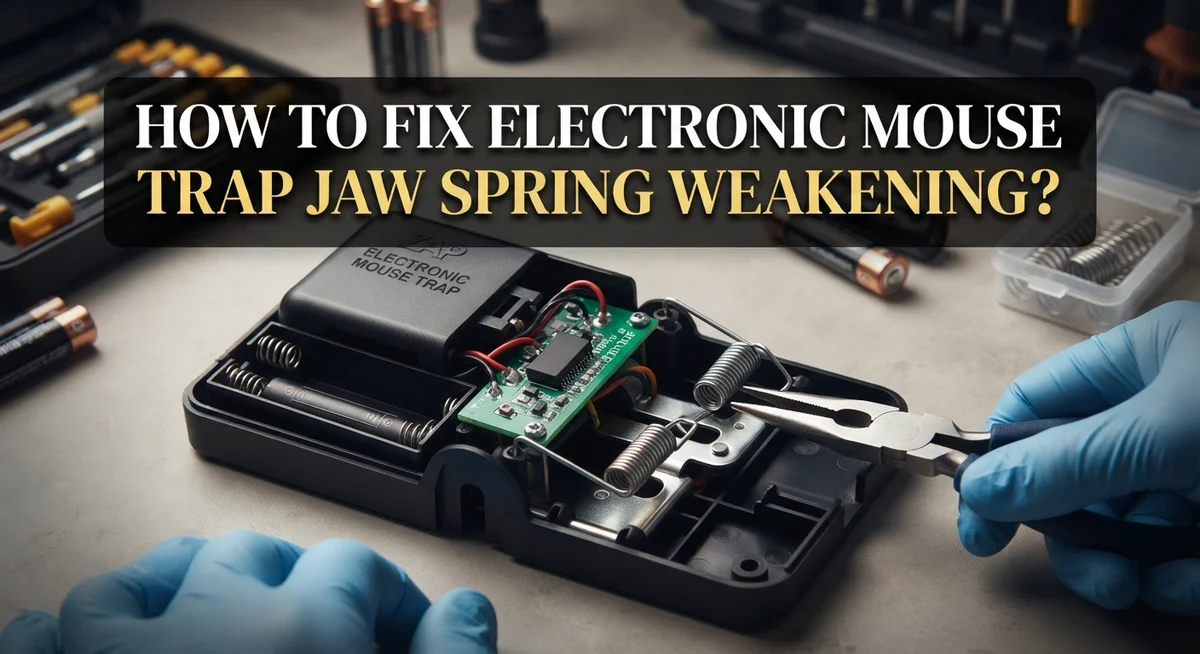
- Adjust the spring tension manually. Grab a pair of pliers and gently twist the metal spring coils around the trap bar. This adds extra tension so the jaw snaps shut properly.
- Test before you set it. Always check the spring tension and battery power before placing bait. This simple habit saves you from repeat failures.
- Handle bait with gloves. This keeps things sanitary and avoids leaving your scent on the trap, which can make mice cautious.
Understanding How Electronic Mouse Trap Jaw Springs Work
Electronic mouse traps use a spring mechanism powered by batteries to create a fast, forceful snap. When you set the trap, the spring stays compressed and ready. The battery sends an electrical signal that releases the spring when a mouse triggers the sensor by touching the bait.
The spring itself is a metal coil wrapped around the trap bar. This coil stores energy when you manually set the trap. Once triggered, the spring releases all that stored energy at once, causing the bar to snap down with force. This speed and power are what make electronic traps effective.
Over time, springs lose their ability to hold tension. This happens because metal fatigues with repeated compression and release cycles. Each time you set and reset the trap, the spring weakens slightly. After many uses, the spring may not snap with enough force to catch a mouse.
Battery power is equally important to spring function. The electrical system needs consistent voltage to trigger the release mechanism. Weak or dead batteries can’t send the signal needed to activate the spring, so the trap simply won’t fire.
The spring and battery system work together as one unit. A strong spring without battery power won’t help you. A fresh battery with a weak spring also won’t work. Both components must function properly for the trap to trigger successfully.
Understanding this connection helps you diagnose problems faster. If your trap fails, you know to check both the battery status and the spring tension. This dual approach saves time and prevents frustration when dealing with persistent mouse problems.
Signs Your Trap’s Spring Tension Has Weakened
A weak spring shows itself in specific ways. You’ll notice the trap fails to snap shut when a mouse touches the bait plate. The trigger simply doesn’t activate, even though you set it correctly.
Dead or weak batteries are the first sign to check. If the trap feels sluggish or slow to respond, battery power is likely dropping. The spring needs electrical energy to work properly. Without it, the mechanism moves slowly or not at all.
Look at the bait plate behavior. A healthy trap snaps down hard and fast. A weak spring trap moves slowly or incompletely. The jaw may close partway but lack the force to catch anything. Mice can escape or simply eat the bait without triggering the mechanism.
Battery contact corrosion creates another telltale sign. Check inside the battery compartment for white or green crusty buildup. This blocks power flow to the spring. Even fresh batteries won’t help if contacts are dirty.
Test the spring manually to confirm weakness. Press the bait plate gently with your finger. It should offer firm resistance and snap back quickly. If it feels loose or moves easily without snapping back, the spring has lost tension.
Another indicator is repeated failures on fresh bait. If mice keep eating your bait without triggering the trap, something is definitely wrong. Don’t assume the trap is broken yet. Battery issues cause this problem most often.
Pay attention to unusual sounds or vibrations. A healthy trap makes a crisp, sharp snap sound. A weak spring trap may make a dull thud or clicking noise instead. This sound difference tells you the spring isn’t performing at full strength.
Common Causes of Jaw Spring Weakening
Old batteries are the number one culprit behind jaw spring weakness. Electronic traps require consistent power to energize the spring mechanism. When batteries drain, the electromagnet loses strength and cannot pull the spring tight enough to snap shut.
Improper battery insertion ranks as the second major cause. Many people insert batteries backward or fail to seat them firmly in the contacts. Even one battery facing the wrong direction cuts power flow completely. The trap then fails to trigger even with fresh batteries installed.
Spring fatigue develops over time from repeated use. Each time the trap snaps shut, the metal coil experiences stress. After hundreds of activations, the spring gradually loses its ability to hold tension. This natural wear happens faster with cheap or low quality traps.
Battery contact corrosion creates another common problem. Moisture and oxidation build up on the metal contact points inside the battery compartment. This corrosion acts like a barrier that blocks electrical current from reaching the spring mechanism. Even new batteries won’t work if contacts are dirty.
Dust and debris can also interfere with spring function. Particles settle inside the trap mechanism and prevent the spring from moving freely. This buildup restricts the spring’s ability to compress and release with full force.
Temperature extremes affect battery performance too. Cold conditions reduce battery output significantly. Heat can damage internal battery components. Traps stored in garages or sheds often experience these temperature swings.
The good news is that most causes are fixable. Battery replacement solves roughly 80 percent of weakness issues. Cleaning contacts takes just minutes. Manual spring adjustment using pliers restores tension quickly. Understanding these causes helps you troubleshoot problems fast and get your traps working again.
Step-by-Step Guide to Restoring Spring Tension
Start by gathering the right tools. You’ll need a fresh set of batteries, a pair of pliers, and clean cloth or paper towel. Having everything ready makes the process faster and less frustrating.
Replace the batteries first. This solves most spring weakness problems. Open the battery compartment on your trap’s underside or side panel. Remove the old batteries completely. Wipe the battery contacts with a clean cloth to remove any dirt or corrosion buildup. Insert new, fully charged batteries into the compartment. Make sure they face the correct direction as shown inside the compartment. Close the panel securely.
Test the trap after battery replacement. Press the bait plate gently with your finger. You should feel strong resistance and hear a click sound. If the spring still feels weak, move to the next step.
Manually adjust the spring tension using pliers. Locate the metal spring coil wrapped around the trap bar. Grip the spring coil firmly with your pliers. Turn the coil clockwise slowly. Make small adjustments, about a quarter turn at a time. Test the spring between each adjustment.
Continue tightening until you feel solid tension when pressing the bait plate. The trap should snap back quickly when released. Avoid over tightening, which can damage the mechanism or make the trap dangerous to handle.
Test one final time before use. Set the trap on a hard surface. Gently press the bait plate. It should trigger smoothly and snap shut with force. Your trap is now ready for deployment.
Checking and Replacing Batteries Correctly
Batteries power your electronic mouse trap’s spring mechanism. When the spring feels weak, dead or depleted batteries are usually the problem. You need to check and replace them correctly to restore full trigger force.
Start by opening your trap’s battery compartment. Most electronic traps use AA or AAA batteries. Remove the old batteries and inspect the contacts inside the compartment. Look for green or white crusty buildup on the metal contacts. This corrosion prevents good electrical connection.
Clean the contacts with a dry cloth or cotton swab. Wipe away any debris or corrosion you find. This simple step often improves performance significantly.
Now insert fresh, new batteries into the compartment. Pay close attention to the polarity markings. Your trap shows plus and minus signs inside. The positive end of each battery must face the correct direction. Incorrect insertion stops the spring from working entirely.
Push the batteries in firmly until they sit flush against the contacts. Don’t force them. They should slide in smoothly and stay in place.
Close the battery compartment securely. Some traps use a sliding cover while others have a screw cover. Make sure it closes completely so moisture cannot enter.
Test your trap by pressing the bait plate gently. You should feel strong resistance and hear a clear click. The spring should snap down with force when triggered.
If the trap still feels weak after battery replacement, the spring itself may need manual adjustment. This requires using pliers to twist the metal coil tighter around the trap bar. Always wear gloves when handling the trap to avoid accidental activation or contamination from previous bait residue.
Tips for Maintaining Long-Lasting Spring Performance
Maintaining long-lasting spring performance requires regular attention and smart habits. Your electronic mouse trap’s spring relies on consistent power and proper care to function reliably.
Check your batteries regularly before they die completely. Most electronic traps lose effectiveness when battery power drops. Replace batteries every three to four months, even if the trap still seems to work. This prevents the gradual weakening that makes traps fail when you need them most.
Keep battery contacts clean and dry. Moisture and corrosion on metal contacts prevent proper electrical flow to the spring mechanism. Wipe the contacts with a dry cloth during each battery change. This simple step extends spring performance significantly.
Store your traps in a cool, dry location. Temperature extremes drain batteries faster and can affect metal spring properties. Avoid damp basements or hot attics where conditions fluctuate wildly.
Test your trap monthly by gently pressing the bait plate. You should feel firm resistance that indicates healthy spring tension. A soft or mushy response means you need to act soon.
Handle the spring carefully when adjusting tension. Use steady, controlled twists with your pliers rather than aggressive jerks. Over-tightening can damage the metal coils permanently.
Wear gloves whenever you touch the bait plate or spring. Oils from your skin can create buildup that interferes with smooth spring movement. This also prevents contamination that might deter mice from taking the bait.
Replace the entire trap if the spring becomes permanently bent or cracked. Metal fatigue eventually makes old springs unusable. A new trap costs far less than dealing with a mouse infestation that spreads through your home.
Mistakes to Avoid When Adjusting Trap Springs
When adjusting trap springs, several mistakes can make the problem worse instead of better. Understanding what not to do protects your trap and keeps you safe.
Never force the spring coils with excessive pressure. Using too much strength with your pliers can bend or crack the metal permanently. A bent spring cannot be repaired and means replacing the entire trap. Apply steady, gentle pressure instead. Turn the coils slowly and test the tension frequently.
Don’t skip battery replacement before attempting spring adjustments. Many people jump straight to manual tweaking when dead batteries are actually the real culprit. This wastes time and creates unnecessary wear on the spring mechanism. Always replace batteries first and test the trap afterward.
Avoid touching the spring with bare hands. Skin oils and moisture transfer to the metal and cause corrosion over time. Corrosion weakens the spring further and reduces its lifespan. Wear cotton gloves or latex gloves whenever you handle any part of the trap mechanism.
Never reuse old batteries or mix battery types in one compartment. Combining old and new batteries creates uneven power delivery. The spring won’t receive consistent electrical signals, making it perform poorly. Use a complete set of fresh, identical batteries every time.
Don’t ignore warning signs like visible rust or discoloration on the spring. These indicate corrosion has already started damaging the metal. Attempting to adjust a corroded spring won’t solve the underlying problem.
Stop adjusting if you hear cracking sounds. This signals the spring is breaking internally. Continue turning will cause complete failure. Replace the trap immediately if this happens.
Finally, never set the trap while actively adjusting the spring. Wait until all adjustments finish and test it safely on a hard surface first.
Troubleshooting Persistent Triggering Problems
When your electronic mouse trap fails to trigger repeatedly, the problem usually stems from weak spring tension combined with power issues. Persistent triggering failures mean mice access your bait without activating the mechanism, leaving you frustrated and pest-free results distant.
Start by identifying whether battery depletion is the culprit. Dead or dying batteries cannot power the spring’s release mechanism effectively. Remove your current batteries and inspect them for corrosion or leakage. Replace them immediately with fresh ones, ensuring proper polarity during insertion. Test the trap by gently pressing the bait plate. If it still feels sluggish, your spring needs manual adjustment.
Use pliers to carefully twist the metal spring coils around the trap bar. This increases tension and restores triggering responsiveness. Make small adjustments rather than aggressive turns. Work slowly and listen for any cracking sounds, which signal internal damage. Stop immediately if you hear these warning noises.
Check your battery contacts for corrosion buildup. White or green deposits prevent proper electrical flow. Clean contacts with a dry cloth or cotton swab before reinserting batteries. Ensure batteries sit flush against contact points.
Wear gloves during all adjustments to prevent skin oils from transferring to metal components. Oil buildup accelerates corrosion and weakens spring performance over time.
If your trap continues triggering weakly after battery replacement and spring adjustment, the mechanism may have sustained permanent damage. Internal components wear out from repeated use, and springs eventually lose their elasticity. At this point, replacement becomes more practical than continued repair attempts.
Regular monthly testing catches weak springs early before they become problematic. Gentle pressure on the bait plate reveals declining performance before complete failure occurs.
Final Thoughts
Fixing a weak jaw spring is a simple task once you know the steps. Most problems come from dead batteries or loose spring tension. Both issues have quick solutions.
Start with the basics first. Check your batteries and confirm they sit correctly in the compartment. This single step solves many trigger failures.
If batteries aren’t the problem, move to the spring itself. Use pliers to gently twist the coils and add tension. Small adjustments work better than big ones.
Patience matters here. Rushing the process can damage the spring beyond repair. Take your time with each twist.
Remember that traps are mechanical tools with limits. Springs wear down after months of use. This is normal and expected.
Your goal is simple: keep the trap functional for as long as possible. Regular checks help you catch problems early. Small fixes now prevent bigger headaches later.
Don’t feel discouraged if your first attempt doesn’t work perfectly. Spring adjustment takes practice. Each trap responds slightly differently to tension changes.
Safety should stay at the top of your mind throughout this process. Handle springs and bait with care always. Your hands and the trap both benefit from proper protection.
A trap that works properly saves you money and time. You won’t need constant replacements if you maintain it well. Simple fixes extend the life of your equipment.
Trust the process and follow each step carefully. Battery checks, spring adjustments, and proper handling all work together. These combined efforts keep your trap ready for action.
With these tips, you now have the knowledge to fix jaw spring problems yourself. Your electronic mouse trap can work like new again.
Frequently Asked Questions
Why won’t my electronic mouse trap trigger when the mouse touches the bait?
The most common reason is dead or weak batteries. Electronic traps need full power to activate the jaw mechanism. Remove the battery compartment and insert fresh, fully charged batteries. Make sure you insert them in the correct direction as shown in your trap’s manual.
If new batteries don’t solve the problem, the spring tension may be too loose. A weakened spring cannot snap shut with enough force to trigger properly.
How do I know if my trap’s spring is actually weak?
Test the trap by gently pressing the bait trigger with your finger. A healthy spring should snap shut quickly and firmly. If it closes slowly or barely moves, the spring has lost tension.
You can also listen for the sound. A strong spring makes a sharp clicking noise. A weak spring produces a dull or muffled sound instead.
What’s the best way to tighten the spring using pliers?
First, wear gloves to protect your hands. Locate the metal spring coils wrapped around the trap bar. Use pliers to twist these coils slightly clockwise. This adds tension to the spring mechanism.
Make small adjustments. Turn the coils just a quarter turn at a time. Test the trigger after each adjustment. Stop when the trap snaps shut with good force.
Can I fix a weak spring without tools?
Manual adjustments require pliers for proper control. Attempting to bend the spring by hand risks injury and may damage the mechanism unevenly.
Pliers give you the precision needed to add tension safely and effectively.
Should I replace the entire trap if the spring weakens?
Not necessarily. Spring weakening is often fixable through battery replacement or manual tension adjustment. Try these solutions first.
Only replace the trap if the spring shows visible cracks, rust, or refuses to respond after multiple attempts at repair.
Hi, I’m Minnie Cole, the creator of The Output Lab — a space where I share my passion for all things tech. I spend my days exploring the latest gadgets, devices, and electronics on Amazon, putting them through real-world testing so you don’t have to.