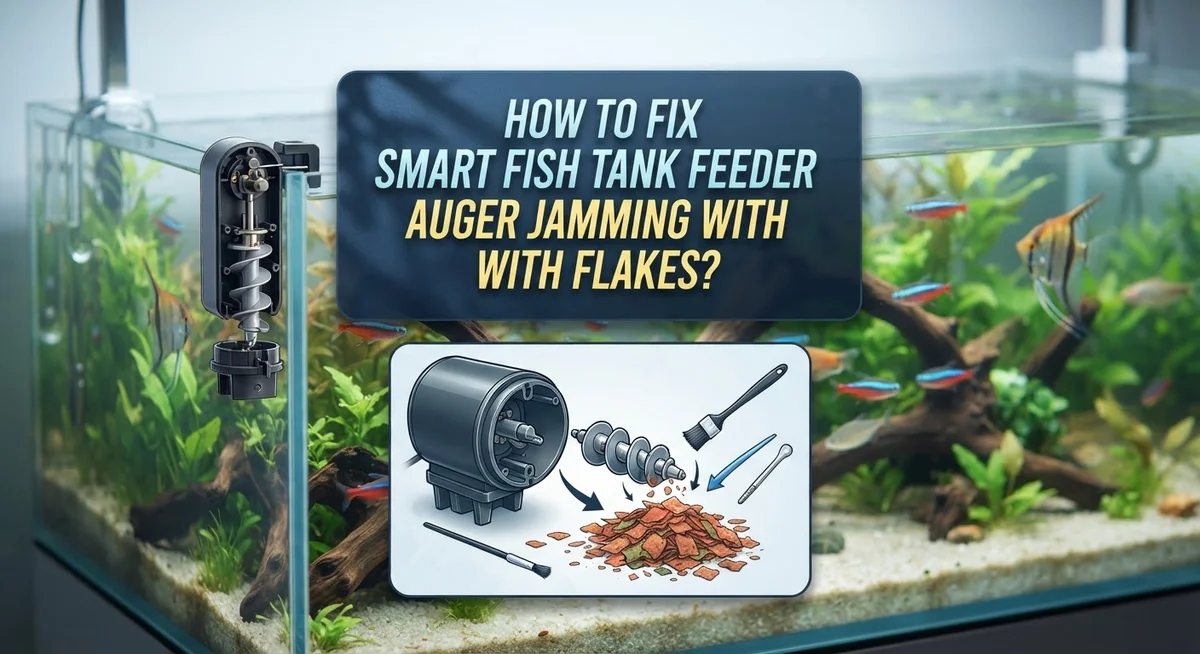
How To Fix Smart Fish Tank Feeder Auger Jamming With Flakes?
Does your smart fish tank feeder skip meals or dump food at odd times? The problem is often a jammed auger. Flakes are usually the culprit.
Flakes are light and flat. They clump together when they meet moisture. This clumping blocks the auger and stops food from dropping.
Many fish owners face this same issue. Your feeder works fine for a few days. Then it jams and your fish miss their meal.
The good news? You can fix this problem quickly. You can also stop it from happening again.
This guide walks you through simple troubleshooting steps. You will learn how to clear a jam safely. We will also cover why moisture is often the real enemy here.
You will discover smart ways to place your feeder. Small changes in position can make a big difference.
We will also compare flakes and pellets. This helps you decide what works best for your tank.
By the end, you will understand your feeder better. You will know how to keep it running smoothly. Your fish will thank you for it.
In a Nutshell
Flake food causes more jams than pellets. Flakes are light and clump easily when they touch moisture.
Here is a quick rundown to fix and prevent auger jams in your smart feeder:
- Switch to pellets. Pellets flow smoother through the auger and jam less often.
- Keep the feeder dry. Water splash and humidity make flakes stick together fast.
- Move the feeder away from the tank edge. This stops water spray from reaching the hopper.
- Raise the feeder higher above the water surface for extra protection.
- Clear the hopper if a jam happens. Remove the food and unscrew the panel to reach the auger.
- Loosen stuck flakes by hand once you open the panel.
Your feeder is a helpful tool, but it does not replace your care completely. Check on it often and keep the food dry.
Small changes like these keep your feeder running smoothly. Your fish get fed on time, every time, without any mess or stress.
Why Flake Food Jams Auger Feeders
Flake food jams auger feeders because of how the food breaks down and absorbs moisture. Flakes are light, flat, and fragile. They crush easily inside the hopper and auger mechanism.
When flakes get wet, they stick together and form clumps. Water splash from your tank, humidity in the air, or rain exposure all trigger this problem. Moisture is the main culprit behind most jams. Even a small amount of water causes flakes to bond and block the auger from turning.
The auger itself is a spiral screw that rotates to push food down. Flakes do not slide smoothly through this design. Instead, they compress and wedge against the auger walls. Pellets, by contrast, roll and flow more freely because they are denser and more uniform in shape.
Flakes also deteriorate faster than pellets. As they break apart, tiny fragments dust the inside of the hopper. This dust mixes with any moisture present and creates a paste like consistency. That paste hardens quickly and locks the auger in place.
Position matters too. If your feeder sits directly over the tank or too close to the water surface, splash reaches it constantly. Splashing water coats the hopper and seeps into cracks around the lid. Over time, this moisture accumulates inside where the food sits.
Wind can also blow mist and spray toward your feeder if it sits near an open window or outdoor area. Even indoor humidity from warm tanks contributes to the problem, especially in rooms with poor air circulation.
Understanding these causes helps you prevent jams before they start. The combination of flake food properties and moisture exposure creates the perfect storm for auger blockages. Recognizing this connection is your first step toward keeping your feeder working smoothly and your fish fed on schedule.
Signs Your Feeder Auger Is Jammed
Your feeder will show clear warning signs before a complete jam happens. Watch for these indicators to catch problems early.
Reduced food output is the first sign. Your feeder dispenses less food than usual, or the portions become inconsistent. You might notice smaller amounts hitting the water each feeding time, even though your settings haven’t changed.
Strange sounds come from the feeder motor. Listen for grinding, clicking, or grinding noises during feeding cycles. These sounds mean the auger is struggling to turn through stuck material. Normal operation should be nearly silent or make only a soft whirring sound.
Food piles up in the hopper without moving down. When you look at the hopper, flakes sit there even after a feeding cycle completes. The auger isn’t pushing food through the tube as it should.
The auger stops mid rotation. Some smart feeders show this through your app notifications. The motor tries to turn but can’t complete a full rotation. It may retry several times before giving up.
Visible moisture or clumping inside the hopper is a major red flag. If flakes look damp or stuck together in chunks, a jam is likely forming soon. This happens when water splash or humidity reaches the food storage area.
The feeder displays error messages on your app or control panel. Many smart feeders alert you when the motor encounters resistance. Check your device manual to understand what each error code means.
Your fish miss meals without explanation. If feeding times pass but no food appears, the auger is probably jammed. Your fish will act hungrier than normal at the next time you feed them manually.
Catching these signs early lets you fix the problem before your fish go hungry. Regular checks during feeding times help you stay ahead of jamming issues.
Step-by-Step Guide to Clearing a Jammed Auger
Start by unplugging your feeder from power. This keeps you safe while you work and prevents the auger from spinning unexpectedly during cleaning.
Next, remove the hopper completely. Most smart feeders have a hopper that twists or clips off the main body. Empty all remaining food into a container or trash. Do not leave any flakes inside, as they can stick to the auger while you work.
Locate the access panel on your feeder. This is usually a small door or removable section that lets you see the auger mechanism. Unscrew or unclip this panel carefully. Keep all screws in a safe spot so you do not lose them.
Look directly at the auger. You will see a spiral screw shape. Use your fingers or a soft brush to gently loosen any stuck flakes around the auger spiral. Work slowly and be gentle. Flakes may crumble easily, so let them fall into a small container below.
For stubborn clumps, use a dry cloth or soft-bristled toothbrush. Wipe the auger spiral in a downward motion. Do not use water or liquid cleaners, as moisture can cause more jamming later.
Check the chute or tube that connects the hopper to the auger. Food often gets trapped here too. Use your fingers or a small stick to clear any blockages gently.
Once everything looks clear, reassemble your feeder in reverse order. Screw the access panel back on. Attach the hopper. Make sure everything clicks or screws in firmly.
Plug the feeder back in and test it without fish present. Run a short feeding cycle to confirm the auger spins freely. Listen for unusual sounds. If the auger moves smoothly, your jam is fixed and your feeder is ready to use again.
Proper Feeder Placement to Prevent Moisture-Related Jams
Moisture is your biggest enemy when it comes to keeping an auger feeder working properly. Water spray and humidity make flakes clump together, and that clumping causes jams. The good news is that proper placement prevents most of these problems before they start.
Position your feeder away from the tank’s splash zone. If water splashes up during feeding or when fish move around, that moisture travels directly into your hopper. Keep the feeder at least 12 to 18 inches away from the tank edge. This distance gives moisture time to settle instead of reaching your feeder.
Elevation matters significantly. The higher your feeder sits above the water surface, the less splash reaches it. Moisture rises from warm water, so placing your feeder lower increases exposure to humidity and water droplets. Mount it on a shelf or stand that keeps it well above tank level.
Check your feeder’s environment too. If your tank sits near a window, wind can blow moisture and mist toward your feeder. Direct sunlight also creates heat that causes water to evaporate and settle on your feeder. Move your setup away from windows and air vents when possible.
Rain and outdoor exposure are serious problems if your tank is outside or near outdoor areas. Even a covered patio allows moisture to drift sideways onto your feeder. Bring outdoor feeders inside or place them under solid protection that blocks all angles of moisture.
Keep humidity low inside your home as well. Good air circulation around your feeder helps. A small fan nearby can push humid air away from your device. These simple placement adjustments keep your auger dry, prevent flakes from clumping, and stop jams from happening in the first place.
Switching Food Types: Flakes vs Pellets for Auger Feeders
Flake food and pellet food behave very differently in automatic auger feeders. Understanding these differences helps you choose the right option for your setup.
Flakes are lightweight and flat. They compress easily when moisture touches them. This compression creates clumps that jam the auger spiral. Pellets, by contrast, stay firm and round. Water doesn’t break them down as quickly. They slide through the auger much more smoothly than flakes do.
Flakes deteriorate faster than pellets overall. Once flakes get even slightly damp, they turn into paste. This paste sticks to the auger walls and hardens. Pellets maintain their shape longer. They resist moisture better because of their dense structure.
The auger mechanism works best with food that doesn’t clump. Pellets roll down the spiral without sticking. Flakes tend to pile up and wedge between the auger and the hopper walls. This wedging is what causes the jam.
If you currently use flakes, switching to pellets can solve most jamming problems. Your feeder will run more reliably. Your fish will also benefit. Pellets sink more predictably than flakes. They dissolve slower in water. This means your fish have more time to eat before food gets lost in the substrate.
Not all fish accept pellets immediately. Some fish raised on flakes need time to adjust. You can mix pellets with flakes gradually. Start with mostly flakes and add more pellets each week. Your fish will learn to eat the new food.
Check your feeder’s manual to see which food types it supports. Some auger feeders work fine with both options if you maintain them properly. Others specifically recommend pellets only. Following the manufacturer’s guidance prevents unnecessary jams and keeps your feeder working as intended.
Common Mistakes That Lead to Repeated Jamming
The biggest mistake people make is using flake food in auger feeders. Flakes are lightweight and flat, which means they don’t move smoothly through the auger mechanism. Once moisture touches them, they turn into paste and stick inside the chute.
Another common error is placing your feeder directly over the tank edge. Water splashes up constantly from fish activity and air bubbles. This spray travels higher than most people expect. Your feeder sits right in the splash zone, collecting moisture with every passing hour.
Many people ignore humidity levels in their homes. An auger feeder works best in dry conditions. If your bathroom is nearby or you live in a humid climate, moisture creeps into the hopper through tiny gaps. The food inside absorbs this dampness and clumps together.
Overloading the hopper is another frequent mistake. When you pack too much food inside, the weight pushes down on the auger. The mechanism struggles to turn and gets stuck more easily. Fill your hopper only three quarters full to let the auger work properly.
Some people leave old food sitting in the feeder for days. Stale flakes break down into powder and dust. This powder mixes with any moisture and creates a paste that jams everything. Empty your hopper completely at least once per week.
Exposing your feeder to rain or wind is a serious problem. If your tank sits outside or near a window, rain spray reaches your feeder. Wind carries moisture and salt air if you live near the ocean. These conditions speed up jamming significantly.
Finally, people forget that automatic feeders are tools, not replacements for your care. Hand feeding your fish several times per week keeps them healthy and lets you spot problems early. A feeder should supplement your routine, not become your only feeding method.
Maintenance Routine to Keep Your Feeder Running Smoothly
A maintenance routine keeps your smart feeder working without jamming. You should check your feeder weekly, even if it seems fine. This prevents small problems from becoming big ones.
Start by inspecting the hopper every seven days. Look for any food dust or crumbs stuck inside. Remove the access panel and look directly at the auger mechanism. Wipe away any debris you see with a dry cloth. This takes just two minutes but stops clogs before they happen.
Clean the chute connecting the hopper to the auger once a week. Food particles collect here and dry out. Use a soft brush to gently remove buildup. Make sure nothing blocks the path where food travels down.
Test your feeder every few days without fish present. Run it for a few seconds and listen for smooth operation. If you hear grinding or stuttering sounds, stop immediately and inspect the auger. Strange noises mean something is jamming inside.
Check your feeder’s location monthly. Moisture levels change with seasons. In summer, humidity rises. In winter, your heater creates dry air. Both extremes can cause problems. Keep your feeder away from water spray and ensure it sits in a stable, dry spot.
Empty old food from the hopper every two weeks. Food sitting too long absorbs moisture from the air. Replace it with fresh food. This simple step prevents paste buildup that jams the auger.
Store your feeder’s spare parts in a dry container. Keep the manual nearby so you remember which screws go where during cleaning. Set a phone reminder for your weekly inspection. Consistency matters most.
This routine takes about ten minutes per week. Regular maintenance costs you almost nothing but saves your feeder from breaking down. Your fish stay fed reliably, and you avoid frustrating jams that interrupt their feeding schedule.
Final Thoughts
Auger jamming is a common problem, but it’s not hard to fix. Most jams happen because of flakes and moisture. Once you understand this, prevention becomes simple.
Pellets are your best friend when it comes to auger feeders. They resist moisture better and move smoothly through the mechanism. This one change can eliminate most jamming issues.
Feeder placement plays a huge role too. Keep your feeder away from splash zones and humid areas. A dry environment keeps the auger turning freely.
Don’t forget about regular maintenance. Quick weekly checks catch problems before they become bigger jams. This small habit saves you time and frustration later.
When jams do happen, stay calm. Remove the food, open the access panel, and clear the blockage by hand. This process only takes a few minutes.
Your feeder is a helpful tool, not a replacement for your attention. Fish still need you to check on them regularly. Technology helps, but it doesn’t remove your responsibility.
Think of your feeder as a partner in fish care. It handles routine feeding, but you handle the oversight. This balance keeps your fish healthy and your feeder running well.
Small changes make a big difference here. Switching food types, adjusting feeder placement, and sticking to a maintenance routine can solve almost every jamming issue you face.
Remember that prevention beats repair every time. It’s easier to stop a jam before it happens than to fix one after it occurs. Spend a little time now to save more time later.
With the right food, proper placement, and consistent care, your feeder will work smoothly. Your fish will get fed on time, and you’ll worry less about interruptions.
Fish tank feeders are meant to make life easier. Follow these simple steps, and your feeder will do exactly that.
Frequently Asked Questions
Why does my auger feeder jam more with flakes than pellets?
Flake food absorbs moisture quickly. When water splashes near your feeder or humidity builds up, flakes soften and stick together. This creates a dense clump that blocks the auger from spinning.
Pellets stay firm and dry much longer. They slide through the chute smoothly without clumping. Flakes are simply not designed for auger mechanisms, which is why manufacturers recommend pellets instead.
What should I do if my auger is already jammed?
First, unplug your feeder. Remove all remaining food from the hopper. Then unscrew the access panel to see the auger directly.
Use a small stick or plastic tool to gently loosen the jammed material. Never use metal tools, as they can scratch the auger. Once loose, clear away all debris by hand. Reassemble the feeder and test it without fish present before using it again.
How can I prevent jams from happening in the first place?
Position your feeder away from water splashes. Keep it at least 12 inches above the tank surface. This reduces moisture exposure significantly.
Store your feeder in a dry location when not in use. Check humidity levels in your room, especially during rainy seasons. If your home is very humid, consider placing a small desiccant packet near the feeder.
Can I use flakes if I’m very careful about placement?
Moisture will still find your feeder eventually. Even careful placement cannot eliminate all humidity exposure. The safest choice is switching to pellets completely.
If your fish absolutely refuse pellets, you must accept higher jamming risks. Plan for more frequent cleaning and manual checks. This requires much more hands-on attention than typical feeder use.
Hi, I’m Minnie Cole, the creator of The Output Lab — a space where I share my passion for all things tech. I spend my days exploring the latest gadgets, devices, and electronics on Amazon, putting them through real-world testing so you don’t have to.