How To Fix Heated Sleeping Bag Element Wire Fraying?
Your heated sleeping bag keeps you warm on cold nights. But that comfort depends on one small thing: the wire inside your bag.
Over time, this wire can fray. It happens quietly, often at the seams or attachment points. You might not notice until you spot a spark, a dead spot, or exposed cabling.
This is not just an inconvenience. A frayed heating wire can create a real safety risk. Exposed wires can cause shocks or even start a fire.
In a Nutshell
- Inspect often. Check attachment points and seams for frayed stitching or exposed wires. Catching damage early keeps you safe.
- Handle with care. Never yank the wire to unplug it. This can break the internal connections and cause hidden damage.
- Watch how you roll it. Rolling your bag too tightly puts stress on the wiring and the synthetic filling inside.
- Patch small tears fast. Fold torn edges back for a clean surface. Then use tape or a patch to seal the area.
- Replace exposed wires immediately. Exposed cabling is a fire and shock hazard. Do not wait to fix this.
- Secure the liner properly. Use clips or tuck the bag under your sleeping pad. This stops the liner from shifting and pulling on wires.
- Safety comes first. If you spot serious damage, stop using the bag right away. A quick fix today prevents a bigger problem later.
Understanding Why Heated Sleeping Bag Wires Fray
Fraying happens when the wires inside your heated sleeping bag lose their protective covering. This damage starts at specific weak points. The attachment points where the wire connects to the bag are the most vulnerable areas. Seams also break down over time, especially if you use your bag frequently.
Several everyday actions cause this problem. Yanking the wire to unplug it creates internal breaks you cannot see immediately. Sharp bends in the wire damage the insulation layer. Wrapping the wire too tightly around the bag crushes the protective coating. Rolling your bag in a tight bundle puts constant stress on the wiring system.
The synthetic filling inside your bag also plays a role. When you roll the bag roughly, the filling shifts and puts pressure on embedded wires. This repeated stress weakens the wire’s outer layer until it starts to fray.
Moisture and temperature changes speed up the fraying process. Cold weather makes materials more brittle. Damp conditions can cause the wire’s protective coating to crack. If you store your bag in a humid space, fraying accelerates.
Understanding these causes helps you prevent future damage. The key is recognizing that fraying rarely happens suddenly. It develops gradually from small stresses that build up over time. By knowing what causes fraying, you can change how you handle, store, and use your bag. This knowledge protects your investment and keeps you safe. Watch for early warning signs like loose stitching or small tears near the wire path. Catching problems early makes repairs easier and prevents serious electrical hazards later.
Signs and Symptoms of Element Wire Damage
When your heated sleeping bag starts to fail, certain warning signs appear. Learning to spot these symptoms early helps you avoid electrical hazards and keeps your bag functional.
Visible fraying at attachment points is the most obvious sign. Look where the heating wire connects to your bag’s fabric. You may see loose threads, broken stitching, or the wire itself starting to separate from its protective covering. These areas experience the most stress during use and storage.
Exposed cabling is a serious red flag. If you can see the bare wire underneath the insulation, stop using the bag immediately. Exposed metal creates fire and electrical shock risks. This damage requires urgent attention.
Check the seams where your liner attaches to the outer shell. Worn areas in these spots often indicate the wire is fraying beneath the surface. Run your fingers gently along the seams to feel for bumps or rough spots.
Splits or holes in the fabric signal internal wire damage. Even small tears can hide fraying wires. Examine both sides of your bag carefully, especially near corners and edges.
Listen for crackling sounds when you turn on the heating element. This noise sometimes means internal wires are breaking down. The bag may also heat unevenly, with some sections staying cold while others get hot.
Feel for stiffness or unusual texture in certain areas. Damaged wires can bunch up or create hard spots inside the filling. Your bag should feel evenly padded throughout.
Temperature changes can worsen existing damage. If your bag heats up faster than normal or shuts off unexpectedly, wire fraying may be the cause. Pay attention to these performance changes as they develop over time.
Tools and Materials Needed for Wire Repair
Before you start fixing a frayed wire on your heated sleeping bag, gather the right tools and materials. Having everything ready makes the repair faster and safer.
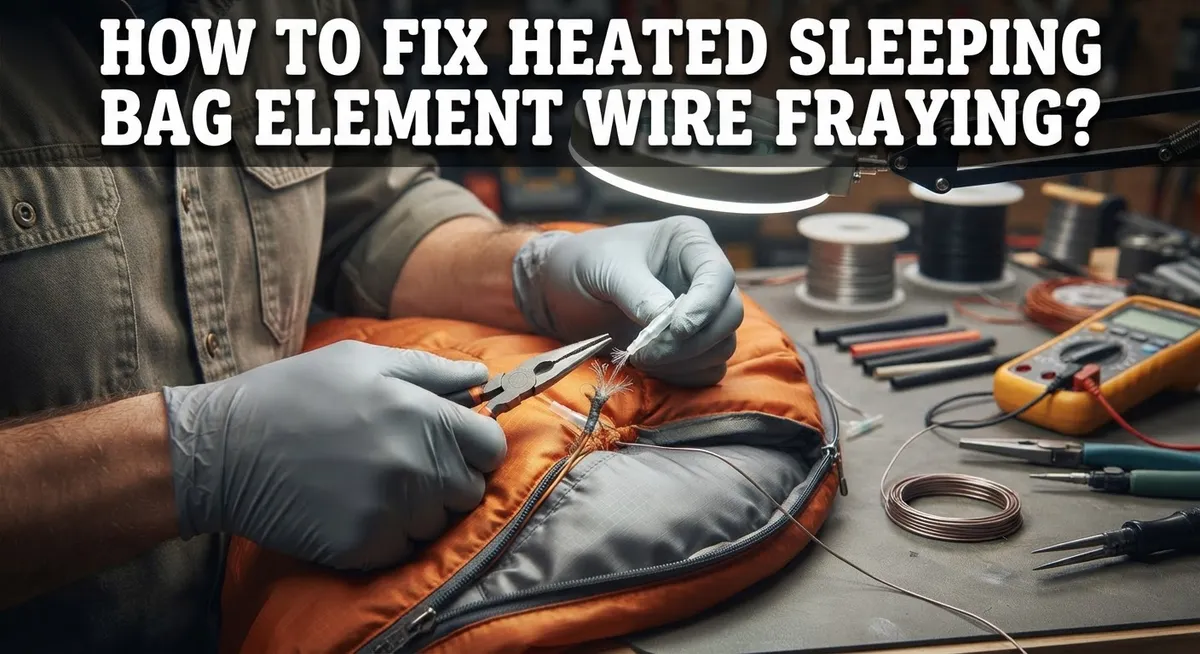
Protective gear keeps you safe during repair work. Wear insulated gloves to protect your hands from electrical hazards. Safety glasses shield your eyes from small wire fragments. A dust mask helps if you work in an enclosed space.
Basic hand tools are essential for most repairs. You will need a small flashlight or headlamp to see the damage clearly. A magnifying glass helps you spot tiny frayed strands. Scissors or wire cutters trim damaged sections. Tweezers let you handle small wires precisely. A small screwdriver may be needed to access attachment points.
Materials for patching and sealing stop further damage. Electrical tape wraps around exposed wires securely. Heat shrink tubing seals wire connections and prevents moisture from entering. Fabric patches cover holes in the sleeping bag’s outer shell. You can use adhesive backed patches or sew them on by hand.
Sewing supplies work well for securing patches. Thread and a needle let you stitch fabric patches firmly in place. A small sewing kit with various needle sizes gives you options. Fabric glue offers an alternative to stitching.
Optional but helpful items make repairs easier. A wire stripper removes damaged insulation cleanly. A soldering iron (if you have experience) can seal wire ends. A multimeter tests whether power flows correctly through the heating element.
Keep all these items in a small box near your repair workspace. Organization saves time and prevents frustration during the actual repair process.
Step-by-Step Guide to Fixing Frayed Wire Sections
Start by turning off your heated sleeping bag completely. Unplug it from the power source and let it cool for at least 30 minutes before touching any wires.
Locate the frayed section by running your fingers gently along the outer fabric. Mark the damaged area with a pen or tape so you don’t lose track of it. Take photos if the damage is hard to see.
Examine the damage closely to determine if the wire itself is exposed or if only the outer protective layer is damaged. If the wire shows through, this requires immediate attention due to electrical safety risks.
Cut away loose threads carefully with small scissors. Don’t pull on frayed edges, as this can damage the internal wiring further. Make clean, straight cuts to remove only the damaged material.
Fold the torn edges back to create a smooth surface for patching. This step prevents further unraveling and gives you a solid base to work with.
Apply a patch over the cleaned area using fabric adhesive or sewing. Press firmly and hold it in place for several minutes. Let the adhesive dry completely according to package instructions before handling the bag.
Wrap the patched section with electrical tape if the wire remains exposed. Layer the tape carefully around the damaged spot, overlapping each wrap slightly.
Test the heating element by plugging it in for just 30 seconds. Feel the repaired area to confirm it’s not getting excessively hot. Unplug immediately if you notice any unusual heat, burning smell, or crackling sounds.
Allow the repair to cure for 24 hours before using your sleeping bag again. This ensures all adhesives and patches set properly for safe, long term use.
Patching and Sealing Damaged Liner Areas
Once you’ve cleaned the frayed area and prepared the edges, patching becomes your next critical step. Start by choosing the right patch material for your specific damage. Fabric patches work best for small holes and tears in the outer liner. These patches adhere directly to the damaged spot using fabric glue or sewing methods.
Apply the patch carefully to ensure full coverage. Press the patch firmly over the cleaned area for at least 60 seconds. If you use fabric glue, allow it to dry completely before moving the bag. For extra strength, stitch around the patch edges using a needle and thread that matches your liner color.
Sealing the patched area prevents moisture and dirt from entering the gap. Electrical tape serves as an excellent secondary seal when wire exposure is a concern. Wrap the tape around the patched section in overlapping layers. This creates a waterproof barrier that protects both the patch and any underlying wiring.
For larger damaged areas, consider using a combination approach. First apply the fabric patch, then seal it with electrical tape for maximum protection. This double layer method stops fraying from spreading further into the liner.
Test your repair before using the bag again. Plug in the heating element for 30 seconds and feel for any heat irregularities near the patched spot. Check that the patch stays firmly attached and shows no signs of peeling or lifting.
Keep patched areas away from sharp objects and rough surfaces. Store your bag flat or loosely rolled to prevent stress on repair seams. Regular inspection of patched zones helps catch any new damage before it becomes a major problem.
Preventing Future Fraying and Extending Element Life
The best way to protect your heated sleeping bag is to stop fraying before it starts. Prevention saves you time and money compared to fixing damage later.
Store your bag properly when not in use. Keep it in a cool, dry place away from direct sunlight. Heat and moisture speed up material breakdown. Never store it while damp or wet. Allow it to dry completely first.
Handle the wires with care during everyday use. Never grab or yank the heating element by its wire. This breaks internal connections and creates fraying points. Carry your bag by its handles or straps instead. When moving it, support the weight evenly across your arms.
Avoid sharp bends and tight wraps around the heating element. Coil the wire loosely when packing. Sharp angles stress the insulation and expose internal strands. Rolling your bag excessively also damages synthetic filling and stresses attachment seams.
Secure the liner firmly to prevent movement inside the bag. Use clips or tuck it under your sleeping pad. When the liner shifts during use, it creates friction that wears protective layers. This friction is a major cause of fraying at seams.
Check your bag regularly for early signs of wear. Look at attachment points where wires connect to the bag. Inspect seams where the liner meets the outer fabric. Catching small issues early prevents them from becoming serious problems.
Handle your bag gently during cleaning and maintenance. Never scrub aggressively or use harsh brushes on heating elements. Gentle care extends the life of your equipment significantly. Simple habits protect your investment and keep you safe.
Common Mistakes That Worsen Wire Damage
Most people make mistakes that speed up wire damage without realizing it. Understanding these errors helps you protect your investment and stay safe.
Yanking the wire is the biggest mistake. When you grab the heating element by its cable and pull hard, you break internal connections inside the wire. The outer sheath may look fine, but the copper strands snap underneath. This damage gets worse each time you use the bag. Always hold the bag itself, never the wire.
Sharp bends damage wires quickly. Folding the heating element into tight angles creates stress points. The insulation cracks at the bend, and fraying starts. When you pack your bag, keep the wire loose and coiled gently. Avoid wrapping it tightly around anything.
Rolling the bag excessively causes problems too. Each roll stresses the synthetic filling and pushes the wire against seams. The constant pressure wears through the protective layer. Instead, fold your bag loosely or store it flat when possible.
Loose liners create movement that damages wires. When the inner fabric slides around inside the bag, the wire rubs against sharp edges and stitching. This friction strips away the protective coating. Secure your liner with clips or position it under your sleeping pad to keep it still.
Ignoring small frays leads to big repairs. Many people notice tiny exposed threads but wait to fix them. Within days, the damage spreads. Water gets inside, rust forms, and electrical hazards appear. Check your bag weekly and fix problems immediately when you spot them.
When to Replace Instead of Repair
Knowing when to replace your heated sleeping bag instead of repairing it saves you time and money. Repair makes sense for small frays at seams or minor damage to the outer liner. However, replacement becomes necessary when damage goes beyond simple fixes.
If the heating element wire itself is broken or severely damaged, replacement is your best option. Exposed cabling creates serious electrical and fire hazards. You cannot safely patch an internal wire break. The element will not heat properly, and you risk injury.
Check the extent of damage at attachment points. When the wire pulls away from where it connects to the power source, repair often fails. These connection points experience constant stress. A patch or tape job won’t hold long term.
Large tears in the liner that expose the heating element throughout multiple areas suggest replacement. If damage covers more than a few inches, patching becomes impractical. The bag loses its insulation value in those sections anyway.
Age matters too. An older sleeping bag with fraying wires may have other hidden wear. Investing in repairs for a ten year old bag often costs nearly as much as buying new.
Consider the bag’s original cost and your usage frequency. Budget bags might not be worth extensive repairs. High quality bags justify repair efforts.
If you’re uncertain, inspect the damage carefully. Small surface frays and liner tears are repairable. Broken wires, large damage areas, and connection point failures mean replacement time. Safety always comes first with heated elements. Never use a bag with exposed wiring or non functional heating.
Final Thoughts
Fixing a frayed wire on your heated sleeping bag does not need to feel hard. Small frays need quick action before they turn into bigger problems.
You now know how to spot damage early. You also know how to patch small tears and protect exposed wires.
Safety should guide every decision you make. Never use a bag with exposed wiring near your skin.
Fire and shock risks grow when you ignore damage. A few minutes of care can prevent a dangerous night.
Regular checks make a big difference over time. Look at your bag before and after each trip.
Catching a loose thread early stops it from becoming a torn liner. This simple habit saves you money and stress.
Good habits also extend your bag’s life. Handle wires gently and avoid tight folds or hard tugs.
Store your bag in a way that keeps the heating element safe from bending or crushing.
These small steps add up. They help your bag last through many more cold nights.
If damage seems too deep or spread out, trust your judgment. Replacement is sometimes the smarter, safer choice.
You don’t need to guess. Use the signs covered in this guide to decide what fits your situation.
A well maintained heated sleeping bag gives you warmth and peace of mind. It lets you focus on the trip, not the gear.
Take a few minutes today to check your bag. That small effort can protect you on your next cold weather adventure.
With the right care, your heated sleeping bag can serve you well for many seasons. Treat it kindly, and it will return the favor with reliable warmth.
Frequently Asked Questions
What causes wire fraying in heated sleeping bags?
Wire fraying happens when the heating element gets stressed or bent the wrong way. Yanking the cable, creating sharp angles, and rolling the bag too tightly all damage the wires inside. The liner can also slide around inside the bag, causing the wire to rub and fray over time.
Attachment points are especially vulnerable. These spots connect the heating element to the bag’s fabric, so they take more stress during use and storage.
How do I spot fraying before it becomes dangerous?
Check your bag regularly for small signs of damage. Look at where the heating element connects to the liner. Examine any areas that feel worn or loose.
Run your fingers gently along the wire path inside the bag. You’re looking for exposed threads, small tears, or loose stitching. Caught early, these issues are much easier to fix.
Can I repair fraying myself or should I replace the bag?
Small frays near seams can be patched. Fold the torn edges back to create a clean line, then use a patch to cover the area. This works well for liner damage that doesn’t expose the wire itself.
However, if the heating element wire is broken or the damage spreads across multiple areas, replacement is safer. Exposed wiring creates fire and electrical shock risks that patches cannot fully address.
What’s the best way to prevent fraying in the future?
Never grab the wire and pull hard. Store your bag flat or loosely rolled, not compressed. Secure the liner with clips or place it under your sleeping pad so it doesn’t shift around.
Avoid folding the heating element into tight angles. These simple habits keep your bag working safely for years.

Hi, I’m Minnie Cole, the creator of The Output Lab — a space where I share my passion for all things tech. I spend my days exploring the latest gadgets, devices, and electronics on Amazon, putting them through real-world testing so you don’t have to.