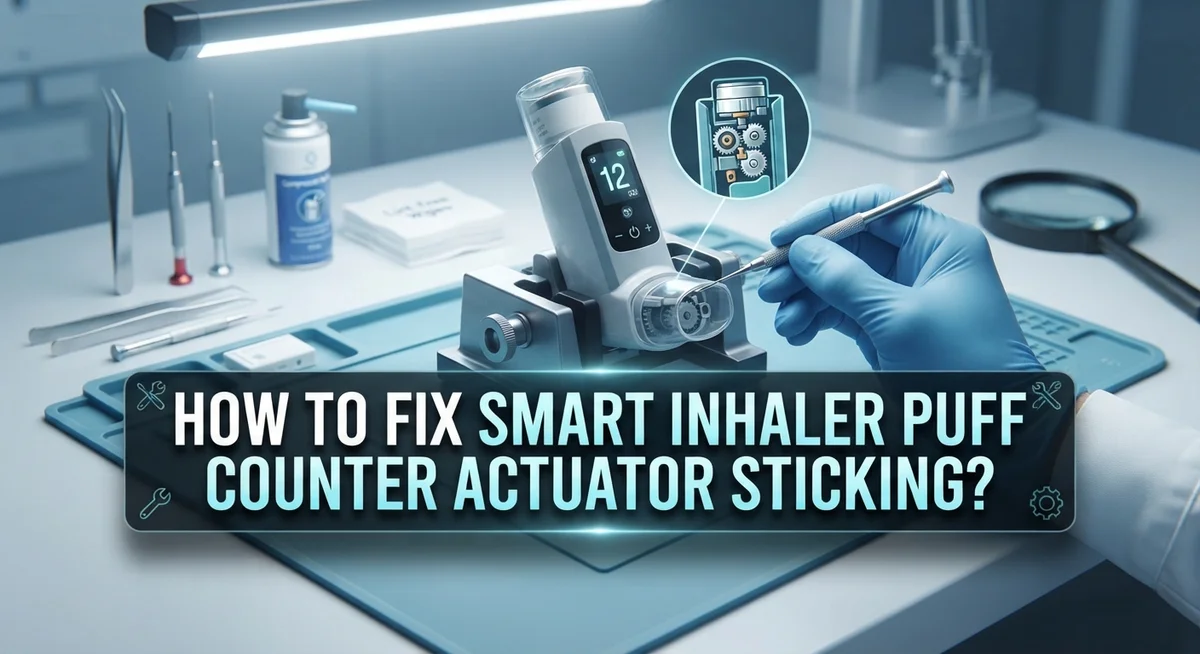
How To Fix Smart Inhaler Puff Counter Actuator Sticking?
Does your smart inhaler feel stuck every time you press it? You are not alone. Many users face this frustrating issue, and it can mess up your puff counter readings.
A sticking actuator often feels like a device problem. But most times, it links back to how you use the inhaler. Simple habits can cause big counting errors.
This guide breaks down why your actuator sticks and how to fix it fast. We will cover easy steps like proper canister shaking and correct inhale timing.
In a Nutshell
- Shake the canister firmly for 10 to 15 seconds before every use. A poorly mixed canister often causes the actuator to feel stuck or stiff.
- Slow down your inhale. Breathing in too fast can jam the counting mechanism and make the actuator resist pressing smoothly.
- Check your timing. Press the actuator and breathe in at the same moment. Pressing too early or too late confuses the sensor and feels like sticking.
- Use a spacer if your doctor recommends one. It reduces timing errors and helps the actuator move freely with each dose.
- Prime your device before first use. Skipping this step can leave air pockets that make the actuator feel tight.
- Review your technique often. Small habits, like aiming at the back of your throat, keep the device working smoothly over time.
Understanding How the Puff Counter Actuator Works
A smart inhaler’s puff counter actuator is the part you press down to release medication. It works by sensing when you push it and counting each dose automatically. The counter then displays or records this information so you know how many puffs you have taken.
The actuator connects to a sensor inside your inhaler. This sensor detects the physical movement when you press the button. Each time the sensor registers a press, the counter adds one to its total.
Your smart inhaler uses this count for several reasons. It helps you remember if you already took your dose today. The counter also tracks your usage patterns over time. Many smart inhalers send this data to your phone or doctor’s office.
The puff counter only counts when the actuator fully compresses. A partial press or a stuck actuator may not register properly. This is why the counter sometimes seems inaccurate.
The actuator mechanism includes a spring inside. This spring pushes back when you release your finger. If the spring gets weak or the button gets stuck, the sensor may not detect the full motion. The device might skip counting or count incorrectly.
Understanding this mechanism helps you see why technique matters so much. When you press too slowly or partially, the sensor may not recognize a complete actuation. The counter needs a full, deliberate press to work correctly.
Your inhaler’s design also depends on proper alignment. When you hold the device at the wrong angle, the actuator may feel stiff or resistant. Holding it straight up and down helps the internal parts move freely.
Regular cleaning keeps the actuator working smoothly. Dust or dried medication can build up around the button. This buildup makes pressing feel harder and can confuse the sensor.
Knowing how your actuator works helps you troubleshoot sticking issues. Most problems come from technique or minor buildup, not from a broken device.
Common Causes of Actuator Sticking
Actuator sticking happens for several reasons. Understanding these causes helps you fix the problem quickly and accurately.
Moisture buildup is one of the most common culprits. Your inhaler sits in humid bathrooms or damp environments. Water particles collect inside the actuator mechanism. This moisture causes the spring and moving parts to stick or move slowly. The puff counter may not register properly when this happens.
Medication residue accumulates over time. Each time you use your inhaler, tiny particles of medication remain on the actuator surfaces. These particles dry and harden. They create friction that makes pressing down feel difficult or stuck. This buildup worsens with each use if you skip cleaning.
Improper technique often feels like sticking. When you press the actuator too slowly or incompletely, it does not fully compress. The sensor inside may not detect a complete puff. You then press again, thinking the device failed. This repeated pressing actually causes more wear on the mechanism.
Temperature changes affect how smoothly your actuator moves. Cold air makes the internal lubricants thicker and slower. Heat can cause slight expansion of plastic parts. These temperature shifts create temporary resistance that feels like sticking.
Dust and debris enter through normal use. Particles from your hands, pockets, or bags settle on the actuator. They interfere with smooth movement and proper compression.
Incorrect priming contributes to sticking sensations. If your device requires priming before first use and you skip this step, the internal mechanism may not work smoothly. Priming prepares all moving parts for proper function.
Worn springs develop over extended use. The internal spring gradually loses its tension. This makes the actuator feel less responsive or harder to press fully. Older devices show this wear more obviously than newer ones.
Each cause requires different solutions. Identifying which cause applies to your situation helps you restore smooth actuator function.
Step-by-Step Fix: Cleaning and Freeing a Stuck Actuator
Start by washing your hands thoroughly. Clean hands prevent you from transferring dirt or oils to your inhaler. Dry them completely before touching the device.
Remove the actuator from the canister carefully. Most smart inhalers allow you to separate these parts without tools. Check your device manual if you are unsure about disassembly. Some models have specific removal steps you should follow.
Rinse the actuator under warm running water. Use your fingers to gently rub away visible medication residue and buildup. Pay special attention to the small grooves and crevices where particles hide. These tight spaces trap dried medication that causes sticking.
For stubborn residue, soak the actuator in warm water for 10 to 15 minutes. This softens hardened medication deposits. After soaking, use a soft cloth or old toothbrush to gently scrub the actuator. Avoid metal brushes or rough materials that scratch the surface.
Inspect the spring mechanism inside the actuator opening. Look for dust, lint, or medication particles clinging to the spring. Use a clean, dry cloth to wipe away any debris you see. Do not force anything into tight spaces.
Dry the actuator completely with a lint free cloth. Any remaining moisture can cause the actuator to stick again. Allow it to air dry for several minutes after wiping.
Reattach the actuator to your canister. Press it back into place firmly until you hear a click. Test the actuator by pressing down slowly. It should move smoothly without resistance.
Test your inhaler with a practice puff into the air before using it for medication. This confirms the actuator moves freely and the puff counter registers correctly. If sticking returns quickly, moisture or residue may be building up faster than normal. Consider using a spacer to reduce how much residue reaches your actuator during normal use.
Correct Inhaler Technique to Prevent Sticking Issues
Your inhaler technique directly affects whether your puff counter actuator sticks or moves freely. Proper form prevents most sticking problems before they start.
Begin by shaking your canister firmly 10 to 15 times before each use. This step mixes the medication evenly and prepares the actuator for smooth compression. Skip this, and residue builds up inside faster.
Hold your inhaler upright with your thumb on the base and your index and middle fingers on top of the canister. Position the mouthpiece in your mouth or use it with a spacer, depending on your prescription. Your grip matters because a loose hold causes uneven pressure on the actuator.
Breathe in slowly and steadily as you press down the actuator. Fast inhalation creates a whistling sound and indicates your breathing is too quick. Slow breathing allows medication to reach your lungs properly and reduces strain on the actuator mechanism.
Time your breath correctly by pressing the actuator at the start of your inhalation, not before or after. Poor timing forces the actuator to work against your breathing pattern, which creates a sticking sensation over time.
Hold your breath for 10 seconds after inhaling to let medication settle in your lungs. Then breathe out slowly through your mouth.
If your doctor recommends a spacer, use it every time. Spacers give you more time to coordinate your breath with the actuator press, which reduces timing errors that cause sticking feelings.
Review your technique with your doctor or pharmacist every few months. Small mistakes develop into habits that damage your actuator. They can watch you use your inhaler and spot problems you might miss.
Consistent, correct technique keeps your actuator moving smoothly and your puff counter accurate.
Mistakes That Make Actuator Sticking Worse
Many people accidentally make actuator sticking worse through common mistakes. Understanding what not to do helps you keep your smart inhaler working smoothly.
Fast inhalation speed is one of the biggest errors. When you breathe in too quickly after pressing the actuator, the medication doesn’t have time to enter your airway properly. This creates pressure buildup inside the device. The actuator then resists moving freely on your next use. You should hear a gentle flow, not a whistling sound. If you hear whistling, you are breathing too fast.
Poor timing between actuation and breath causes major problems. Some people press the actuator before they start breathing in. Others wait too long after pressing. Both mistakes confuse your smart puff counter and stress the actuator mechanism. The device expects you to press and inhale at nearly the same moment. This synchronized action prevents mechanical strain.
Skipping the shake step leaves medication unevenly distributed inside the canister. When you don’t shake your inhaler 10 to 15 times before use, the propellant separates from the medication. Your actuator then sprays inconsistently. This uneven spray makes the actuator work harder than it should.
Using your inhaler without a spacer when one is recommended adds unnecessary difficulty. A spacer gives you more time to coordinate your breathing with the medication release. Without it, you must time everything perfectly. This increases the chance of improper technique that stresses your actuator.
Neglecting regular cleaning lets residue build up inside the mechanism. Even small amounts of dried medication create friction. Your actuator feels stickier with each use. Cleaning prevents this gradual decline in performance.
Ignoring device specific instructions is also problematic. Different inhalers have different requirements. Some need priming before first use. Others have breath activated designs. Following your exact device manual prevents technique errors that damage the actuator.
Troubleshooting Persistent Counter or Actuator Problems
When your puff counter or actuator keeps sticking despite cleaning and proper technique, you may face deeper mechanical issues. Persistent problems often signal that something needs professional attention or replacement.
Start by checking if the actuator moves at all. Press down gently and listen for any grinding sounds or feel for resistance. If the actuator feels completely frozen, forcing it could cause permanent damage. Stop immediately and contact your healthcare provider or device manufacturer.
Test your inhaler with practice puffs into the air several times. Count how many actuations it takes before the counter stops responding. If the counter freezes at specific numbers, this points to an electronic glitch rather than a physical blockage.
Environmental factors can cause persistent sticking. Cold temperatures make lubricants inside the actuator thicken and stick. Humidity can cause internal corrosion. If you live in extreme climates, store your inhaler at room temperature away from bathrooms and windows.
Try a different approach to cleaning. Instead of just rinsing, disassemble the actuator completely if your device allows this safely. Some inhalers have removable internal parts that trap debris. Check your device manual for disassembly instructions before attempting this.
If sticking happens immediately after cleaning, you may have dried the actuator incompletely. Water trapped inside creates friction. Let it air dry for 24 hours in a warm, dry location.
When nothing works, replacement becomes necessary. Actuators wear out after extended use. Springs lose tension. Internal seals degrade. These parts cannot be repaired at home.
Contact your pharmacist or doctor if sticking continues after you have cleaned the device thoroughly and verified your technique is correct. They can determine whether your actuator needs replacement or if your inhaler requires professional servicing. Do not continue using a stuck inhaler, as you may not receive proper medication doses.
Maintenance Tips to Keep the Actuator Working Smoothly
Regular maintenance keeps your smart inhaler actuator moving smoothly and your puff counter working accurately. Think of maintenance as preventive care that stops problems before they start.
Clean your actuator weekly if you use your inhaler daily. Remove the canister from the plastic housing and rinse the actuator under warm running water. Use your fingers to gently wipe away any dried medication or residue. Pay special attention to the small opening where the canister inserts.
Let all parts air dry completely on a clean cloth. This step matters more than people realize. Moisture trapped inside causes sticking and counter errors. Wait at least 30 minutes before reassembling your inhaler.
Store your inhaler at room temperature away from extreme heat or cold. Hot environments can damage internal lubricants. Cold temperatures thicken these lubricants, making the actuator stick. Keep your inhaler in a dry place, never in a bathroom where steam and humidity accumulate.
Check your actuator’s movement weekly without using medication. Press it gently several times to feel for smooth operation. Listen for any grinding sounds or feel for resistance. These signs warn you that buildup is forming.
Replace the canister cap immediately after each use. This prevents dust and debris from entering the mechanism. A closed cap also protects the actuator from accidental damage.
Review your inhaler technique monthly to prevent problems from starting. Even small mistakes compound over time and eventually cause sticking. Ask your doctor or pharmacist to watch you use your inhaler and provide feedback.
Keep your inhaler away from direct sunlight. UV rays can degrade plastic components and affect the counter’s electronics. Store it in a cool, dark location like a drawer or cabinet.
These simple maintenance habits add months or years to your actuator’s lifespan and keep your puff counter accurate.
Final Thoughts
A sticking actuator feels frustrating. But most fixes are simple and quick.
Proper technique solves many problems before they start. Shake your canister well. Breathe in slowly. Time your actuation correctly.
Regular cleaning keeps your actuator moving freely. Dried medication causes most sticking issues. A weekly clean prevents this buildup.
Sometimes technique and cleaning are not enough. Mechanical wear happens over time. Parts inside the actuator degrade with heavy use.
Environmental factors also play a role. Cold weather thickens lubricants inside the mechanism. Heat can warp small plastic parts.
Store your inhaler at room temperature. This simple step protects the actuator from unnecessary stress.
Testing your device regularly catches problems early. Practice puffs without medication show you how the actuator moves. Notice any resistance right away.
When cleaning and technique fail to help, replacement becomes your best option. An actuator that stays stuck despite your efforts likely has internal damage.
Trying to force a stuck actuator often makes things worse. It can damage the counting mechanism further. This leads to inaccurate puff counts.
Your puff counter only works well when the actuator moves freely. These two parts depend on each other completely.
Consistency matters more than perfection. Small habits, done regularly, protect your device long term. Clean weekly. Check monthly. Store carefully.
Most sticking issues come from a mix of small factors. Technique, cleaning, and storage all work together. Fixing one area often improves the others too.
If your inhaler still sticks after trying everything here, talk to your pharmacist or doctor. They can check if the device itself has a manufacturing issue.
Your smart inhaler is a tool for your health. Treating it well means it treats you well in return. A little care goes a long way toward accurate readings and reliable relief.
Frequently Asked Questions
Why does my smart inhaler actuator feel sticky when I press it?
A sticky actuator usually means your technique needs adjustment or the device needs cleaning. Improper inhalation timing is the most common cause. You might be breathing in too fast, too slow, or at the wrong moment after pressing the button.
Dust and dried medication residue also build up inside the actuator. This happens naturally over time, especially with daily use. The good news is that most sticking problems are fixable without replacing your inhaler.
Can wrong inhalation speed actually cause the actuator to stick?
Yes, it can. When you inhale too quickly, you create pressure changes that affect how the actuator moves. The device is designed for a specific breathing pattern, and rushing disrupts that rhythm.
Slow, steady breathing gives the actuator room to function properly. If you hear a whistling sound when you use your inhaler, you’re breathing in too fast. Practice taking a gentle breath right after you press the button.
Should I use a spacer to help with actuator sticking?
A spacer can definitely help. It gives you more time to coordinate your breath with the medication release. This reduces timing errors that make the actuator feel stuck or sluggish.
Spacers also improve how much medicine actually reaches your lungs. They’re especially useful if you find it hard to time your inhalation correctly. Ask your healthcare provider if a spacer is right for your specific inhaler.
What’s the right way to shake my inhaler before use?
Shake the canister firmly 10 to 15 times before each use. This mixes the medication evenly and prepares the actuator for smooth operation. A well mixed inhaler moves more freely and delivers consistent puffs.
Hold the inhaler upright while shaking. You should feel the canister moving inside the plastic case. Skipping this step often leads to sticky actuators and inaccurate puff counts.
Hi, I’m Minnie Cole, the creator of The Output Lab — a space where I share my passion for all things tech. I spend my days exploring the latest gadgets, devices, and electronics on Amazon, putting them through real-world testing so you don’t have to.