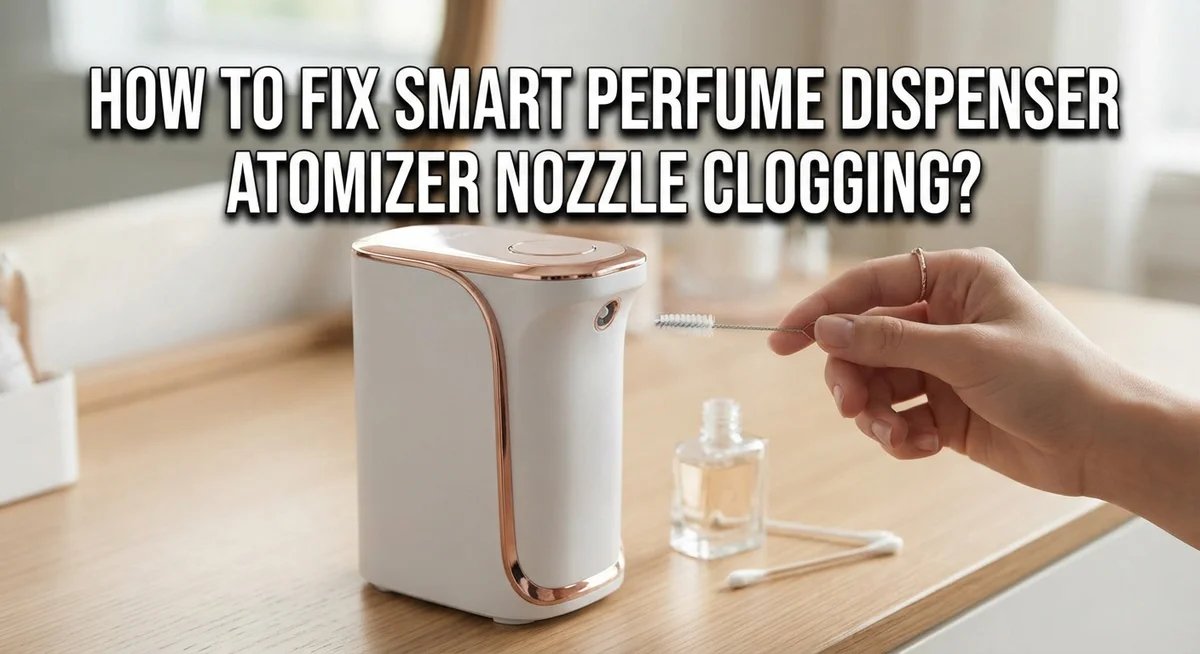
How To Fix Smart Perfume Dispenser Atomizer Nozzle Clogging?
Does your smart perfume dispenser suddenly stop spraying? You press the button, but nothing comes out. This is a common problem, and it usually points to one thing: a clogged nozzle.
Perfume residue builds up inside the atomizer over time. This buildup blocks the tiny opening where the mist sprays out. The good news? You can fix this yourself in just a few minutes.
You do not need any special tools or professional help. A few household items are all you need to get your dispenser working again.
In a Nutshell
- Find the blockage first. Most clogs happen because dried perfume residue builds up inside the nozzle opening. A quick look often shows the problem right away.
- Use a fine pin or needle. Gently insert it into the nozzle and move it around for a few seconds. This loosens the dried residue without damage.
- Try rubbing alcohol for tough buildup. Dip a cotton swab in it and clean the nozzle area. Alcohol dissolves sticky residue that a pin cannot remove alone.
- Handle jammed nozzles carefully. Use pliers to twist the nozzle counterclockwise until it loosens. Twist clockwise again until the pump pops back up.
- Avoid rough handling. Glass bottles crack easily, so work slowly and calmly.
- Reassemble once clean. Put the atomizer cover back on and test the spray function.
Understanding Why Atomizer Nozzles Clog
Atomizer nozzles clog for one simple reason: perfume residue accumulates inside the spray opening. When you use your smart dispenser regularly, tiny drops of fragrance dry and harden on the nozzle walls. This buildup blocks the spray path.
The problem gets worse over time. Each time you press the button, a small amount of liquid enters the nozzle. When it dries, it leaves behind a thin layer of sticky residue. After weeks or months, these layers stack up and seal the opening completely.
Temperature changes make clogging worse. When your dispenser sits in a warm room, perfume inside becomes thinner and flows more easily. As it cools down, the fragrance thickens and hardens faster. This cycle repeats constantly, creating more buildup.
Humidity also plays a role. Moisture in the air can cause perfume to crystallize inside the nozzle. These crystals act like tiny barriers that stop the spray from flowing through.
Some perfume formulas clog more easily than others. Heavy, oily fragrances leave thicker residue than light ones. Older perfumes that have been sitting for years tend to thicken and clog faster.
The good news is that clogging is completely normal and fixable. It does not mean your dispenser is broken or defective. The nozzle simply needs cleaning. You can restore full spray function in just a few minutes using basic household items.
Understanding why clogging happens helps you prevent it in the future. Regular cleaning and proper storage can reduce how often you deal with this issue. Most people find that a quick monthly check keeps their atomizers working perfectly.
Signs Your Dispenser Nozzle Needs Attention
Your smart perfume dispenser shows clear warning signs when the atomizer nozzle needs cleaning. Recognizing these early signals saves you time and frustration.
The spray becomes weak or uneven. Instead of a strong mist, you get a thin stream or scattered droplets. This happens because the nozzle opening narrows as residue builds up inside. The perfume still flows, but the spray pattern changes noticeably.
Nothing comes out when you press the button. This is the most obvious sign. You hear the pump mechanism working, but no perfume sprays. The blockage has become complete, and the nozzle needs immediate attention.
The nozzle feels sticky or stiff. When you touch the spray button, it does not move smoothly. It may feel gummy or resistant. This stickiness comes from dried perfume coating the internal parts of the atomizer.
You notice visible residue around the nozzle opening. Look closely at the tip of the spray nozzle. Dried perfume appears as a crusty, discolored buildup. Sometimes you can see it blocking the small hole where the spray comes out.
The dispenser leaks from the nozzle area. Liquid drips or pools around the base of the atomizer instead of spraying out. This means the blockage redirects the liquid flow in the wrong direction.
Your perfume smells different or weaker. A clogged nozzle sometimes affects how the scent disperses. You may notice the fragrance does not project as far as it once did.
Pay attention to these signs. Early action prevents total failure and keeps your dispenser working smoothly for months longer.
Tools and Supplies You’ll Need
Before you start fixing your smart perfume dispenser, gather the right supplies. Having everything ready makes the job faster and prevents damage to your device.
Fine pins or needles work best for clearing blocked nozzles. A standard sewing needle or safety pin removes dried perfume without scratching delicate spray openings. Make sure the pin is thin enough to fit inside the nozzle hole.
Rubbing alcohol dissolves stubborn perfume buildup effectively. Use standard isopropyl alcohol from your bathroom cabinet. This liquid breaks down dried residue that simple water cannot remove.
Cotton swabs help you clean hard to reach areas around the nozzle. They absorb liquid and reach into crevices where buildup hides. Regular cotton swabs work fine for this task.
Soft cloth or paper towels dry the nozzle after cleaning. These prevent moisture from dripping back into the perfume bottle. Lint free cloths work better than rough paper towels.
Pliers or a small wrench help if the nozzle feels completely jammed. You need these only when the atomizer feels stuck and won’t move by hand. Keep them nearby just in case.
Small bowl or cup holds rubbing alcohol while you soak cotton swabs. This keeps your workspace organized and prevents spills.
Magnifying glass (optional but helpful) lets you see inside the nozzle better. Small blockages become visible under magnification. This helps you target problem areas more accurately.
Newspaper or paper towels protect your work surface. Perfume stains fabric and wood easily. Lay down protection before you begin.
Gather these supplies in one spot before starting. This approach keeps you focused and prevents frustration during the cleaning process.
Step-by-Step Guide to Unclogging the Nozzle
Start by examining your smart perfume dispenser closely. Look at the nozzle opening and see if you can spot any visible blockage or dried perfume buildup.
Remove the atomizer cover by gently twisting it counterclockwise. Set it aside on a clean surface where you won’t lose it.
Take a fine pin or needle and insert it straight into the spray nozzle opening. Move it around gently for several seconds to break up any hardened residue inside. Don’t push too hard, as you could damage the internal spray mechanism.
Dip a cotton swab into rubbing alcohol. Use it to clean around the nozzle opening and inside the spray hole. The alcohol dissolves stubborn perfume buildup that a pin alone cannot remove. Repeat this step two or three times until the cotton swab comes away clean.
If the nozzle feels completely stuck and won’t budge, use pliers to unscrew it. Turn counterclockwise slowly until the nozzle loosens from the pump. Once loose, twist it clockwise until you hear or feel the pump pop back into place. This action often releases trapped residue.
Soak a fresh cotton swab in rubbing alcohol and clean the nozzle one more time. Pay special attention to the interior spray hole where liquid passes through.
Let everything air dry for a few minutes. The rubbing alcohol evaporates quickly, so this won’t take long.
Screw the atomizer cover back on by turning it clockwise. Make sure it’s tight but not over tightened, which could crack the glass bottle.
Test your dispenser by pressing the spray button several times. You should hear a satisfying mist and feel normal spray pressure. Your smart perfume dispenser is now ready to use again.
Deep Cleaning a Severely Jammed Nozzle
When your smart perfume dispenser nozzle becomes severely jammed, you need a more aggressive approach than simple pin insertion. This situation requires patience and the right technique to avoid permanent damage.
Start by examining the nozzle closely with a magnifying glass if possible. Look for visible crystallized perfume or hardened residue blocking the opening. Sometimes what feels jammed is actually just stubborn buildup that needs dissolving rather than mechanical clearing.
Use pliers to gently unscrew the nozzle counterclockwise. Apply steady pressure without forcing it. The goal is slow rotation, not sudden twisting. If resistance increases, stop and apply rubbing alcohol around the base where the nozzle meets the atomizer. Let it soak for 5 to 10 minutes to soften the blockage.
Try unscrewing again with the same gentle, steady pressure. Once loose, completely remove the nozzle from the atomizer. Submerge the nozzle in a small bowl filled with rubbing alcohol for 15 to 20 minutes. This dissolves even thick perfume deposits inside the spray channel.
After soaking, use a fine pin to carefully probe through the nozzle opening. Move the pin gently in circular motions for several seconds. Clean away any loosened debris with a fresh cotton swab dampened in alcohol.
Rinse the nozzle under lukewarm water and dry it completely with a soft cloth. Inspect the internal channel one more time using your magnifying glass. If you see remaining blockage, repeat the soaking process.
Screw the nozzle back clockwise onto the atomizer. Turn it firmly but gently until you feel it seat properly. Test your dispenser immediately by pressing the spray button several times. The nozzle should now spray smoothly and evenly.
Helpful Tips for Effective Cleaning
Effective cleaning keeps your smart perfume dispenser working smoothly. Start by inspecting the nozzle closely under good lighting. Look for visible perfume residue or crystallized buildup around the opening.
Use a fine needle or pin as your primary tool. Insert it gently into the spray nozzle opening and move it in circular motions for several seconds. This action breaks up accumulated residue without damaging the delicate spray mechanism. Avoid pushing too hard, as excessive force can crack the nozzle.
Rubbing alcohol is your best cleaning agent. Dip a cotton swab into rubbing alcohol and wipe around the nozzle opening thoroughly. The alcohol dissolves stubborn perfume buildup that water cannot remove. For deeper cleaning, soak a cotton swab in alcohol and hold it against the nozzle opening for 30 to 60 seconds.
Work patiently through stubborn blockages. Repeat the pin insertion and alcohol cleaning process two or three times if needed. Each cycle removes more residue.
After cleaning, rinse the nozzle gently under lukewarm running water. This removes alcohol residue and any loosened particles. Pat everything dry with a soft cloth or paper towels.
Handle glass bottles with care during the entire process. Glass atomizers break easily if dropped or squeezed too hard. Work over a newspaper or protected surface to catch any spills.
Let your dispenser air dry completely before reassembling. This prevents alcohol from interfering with spray functionality. Test the dispenser several times to confirm the clog is gone. If spraying still feels weak, repeat the cleaning process one more time.
Common Mistakes to Avoid During Cleaning
When cleaning your smart perfume dispenser atomizer nozzle, several mistakes can make things worse. Understanding what to avoid will protect your device and save you frustration.
Don’t use excessive force on any part of your dispenser. Many people panic when the nozzle won’t spray and immediately grab tools or push hard. This damages the delicate spray mechanism inside. Gentle, steady pressure works much better than aggressive action.
Avoid using household items that aren’t suitable for cleaning. Toothpicks, paper clips, or rough wire can scratch the nozzle opening or break inside it. Stick with fine needles or pins designed for this purpose. These tools let you work carefully without causing damage.
Never skip the inspection step. Some people jump straight to aggressive cleaning methods without first looking at what’s blocking the nozzle. A quick visual check tells you whether you need gentle cleaning or more intensive work. This saves time and prevents unnecessary treatment.
Don’t rush the drying process. Reassembling your dispenser while parts are still wet causes new clogs to form. Water mixed with perfume residue hardens quickly. Always let everything air dry completely before putting it back together.
Avoid mixing different cleaning liquids. Combining rubbing alcohol with other solvents can create reactions that damage plastic components or create sticky residue. Use one cleaning method at a time and rinse thoroughly between attempts.
Don’t forget about the surrounding areas. Perfume buildup often accumulates around the nozzle base, not just inside the opening. Clean these spots too, or the problem returns quickly.
Finally, resist the urge to force the atomizer cover off. Twisting too hard strips the threads. Turn gently and steadily until it comes free naturally.
Preventing Future Clogging Issues
Preventing future clogging issues keeps your smart perfume dispenser working reliably. The best prevention strategy starts with how you store and use your device.
Store your dispenser in a cool, dry place away from direct sunlight. Heat causes perfume to evaporate faster, leaving behind sticky residue inside the nozzle. This residue accumulates and blocks spray function. A dark cabinet or drawer works perfectly for storage.
Use your dispenser regularly. Consistent spraying keeps the nozzle clear and prevents perfume from drying inside the opening. If you don’t use it for weeks, the liquid hardens and creates blockages. Even a few test sprays every couple of weeks helps maintain flow.
Always replace the atomizer cover immediately after each use. Leaving the nozzle exposed allows air to enter and dry out the perfume inside. A sealed cover protects the opening from dust and debris as well.
Check your nozzle monthly for visible blockages. A quick inspection takes seconds and catches problems early. Look for dried perfume around the spray opening or inside the nozzle hole.
Avoid storing your dispenser in extremely hot environments. Bathrooms with hot showers create steam that damages the mechanism. Keep it away from windowsills and heat sources.
Consider using distilled water to rinse the nozzle occasionally if your perfume tends to clog frequently. This gentle maintenance removes light buildup before it becomes a serious problem. Dry the nozzle completely afterward.
These simple habits reduce clogging significantly. Regular maintenance prevents most issues before they start. You’ll enjoy consistent spray performance and extend your dispenser’s lifespan considerably.
Final Thoughts
A clogged nozzle does not mean your dispenser is broken. Most clogs happen because of simple residue buildup over time.
You now know how to fix this problem quickly. A pin, some rubbing alcohol, and patience solve most issues.
Remember to stay calm when your dispenser stops spraying. Panic leads to rushed decisions and possible damage.
Take your time with each step. Rushing through cleaning often creates new problems instead of solving old ones.
Gentle handling matters most throughout this entire process. Your dispenser has small, delicate parts that need careful attention.
Glass bottles crack easily under pressure. Pliers should only be used when truly necessary and always with light pressure.
Regular maintenance prevents most clogging issues before they start. A few minutes of monthly checking saves you frustration later.
Think of this as a small habit rather than a big chore. Checking your nozzle takes less time than making your morning coffee.
Your dispenser will thank you for this small investment of time. Clean nozzles mean consistent, reliable perfume spraying every single day.
Every dispenser eventually faces some clogging. This is completely normal and expected with regular use.
The good news? You now have the knowledge to handle it yourself. No need for expensive repairs or replacements.
Simple tools and basic care go a long way here. A pin, some alcohol, and a soft cloth handle most problems.
Keep these steps in mind for future reference. Your smart perfume dispenser will continue working well for years ahead.
Trust the process and trust yourself. Fixing a clogged nozzle is easier than most people think.
Frequently Asked Questions
Why does my smart perfume dispenser nozzle get clogged?
Perfume residue builds up inside the spray nozzle opening over time. When you spray, tiny liquid particles dry and harden around the nozzle tip. This creates a blockage that stops the spray from working. The problem gets worse if you don’t use your dispenser regularly or store it in hot places.
Can I fix a clogged nozzle without taking it apart?
Yes, you can try the simple method first. Take a fine needle or pin and gently insert it into the spray opening. Move it around for several seconds to break up the dried residue. This works for light clogs caused by surface buildup.
What should I use to clean a stubborn clogged nozzle?
Rubbing alcohol is your best choice for dissolving tough perfume buildup. Dip a cotton swab in rubbing alcohol and clean around the nozzle opening. You can also soak the nozzle tip in alcohol for a few minutes. This dissolves the hardened perfume particles that a pin alone cannot remove.
How do I unscrew a jammed atomizer when the nozzle is stuck?
Use pliers to grip the nozzle base gently and turn it counterclockwise. Once it loosens, twist it clockwise until the pump pops up. This separates the atomizer from the bottle so you can access and clean the internal parts. Handle the glass bottle carefully during this step to avoid dropping it.
How often should I inspect my nozzle for clogs?
Check your nozzle once a month for visible blockages. Look for dried perfume around the opening or a weakened spray pattern. Catching clogs early makes cleaning much easier. Regular inspection takes just one minute and prevents bigger problems later.
Hi, I’m Minnie Cole, the creator of The Output Lab — a space where I share my passion for all things tech. I spend my days exploring the latest gadgets, devices, and electronics on Amazon, putting them through real-world testing so you don’t have to.